

Celebrating 50 years of the hardware that makes our PCs tick | PC Gamer - hamiltonsexpround
Celebrating 50 years of the ironware that makes our PCs tick
Apparently, it's the 50th anniversary of the really first commercial telecasting game, a commemoration to which many volition without doubt take profound epistemic exception on account of some or other obscure oscilloscope-based laboratory curiosity.
In any event, to complement that one gaming landmark and provide plenty more opportunities for a fact-checking furore, here is a list of PC hardware firsts from the annals of technology. Have at 'em, kids.
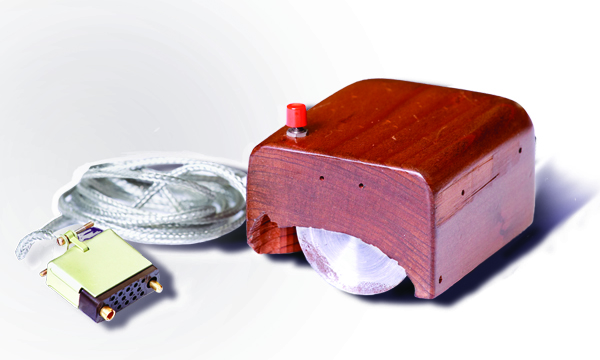
The first mouse
Arguably, the first information processing system pointing device roughly the size and shape of a rodent and with a cable resembling a tail dates back to 1964.
Workings at the Stanford Research Institute, Bill English helped Douglas Engelbart form the first mouse prototype based on conceptual do work done the previous yr aside Engelbart.
As it happens, that mouse was used as a critical part of what has since become known as the 'Mother of All Demos', a keynote presented in 1968 by Englebert in which he incontestible for the first prison term in a single arrangement with many of the core elements of modern personal computing, including a Graphical user interface with resizable application windows, hypertext, the prompt, video conferencing, word processing and collaborative sincere-time editing.
English and Englebert's mouse used wheels rather than a trackball to register movement. The first mouse based on a trackball was offered for sale in 1968 by the German keep company AEG-Telefunken as an input device for its SIG 100 vector graphics terminal, a subsystem of a central processor computer. The mouse weighed nearly one-half a kilo and had a lone input button.
As for the first mouse attached to something akin to a personal computer, that came with the Xerox Alto of 1973, a single-cabinet machine with a list price of around $100,000 in today's money.
In the early 1980s, the Xerox 8010, Sun-1 and Malus pumila Lisa began to popularise the black eye, with Logitech introducing its first tertiary-political party mouse in 1982, the same year that Microsoft added mouse compatibility to MS Word.
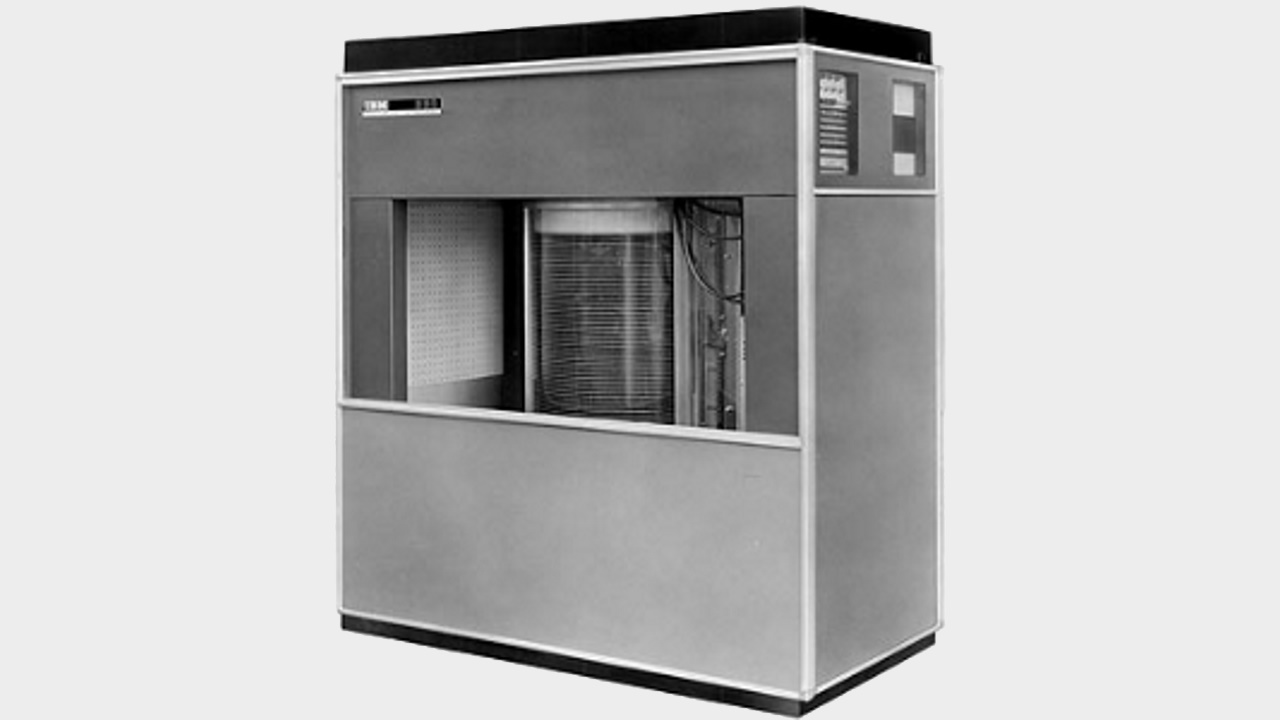
The first hard drive
Problem is, the IBM 350 was the size of a large cupboard.
The first touchy disk drive (Beaver State HDD for short) dates way back to 1956 and the IBM 305 RAMAC mainframe with its IBM Model 350 disk storehouse.
It was the first such system to store and retrieve data happening a disk via a moving mind.
The IBM Framework 350 was 60-inches long, 68-inches high and 29-inches deep and contained 50 magnetic disks rotating at 1,200RPM and had a gross capacity of 3.75MB. Seek time averaged about 600 milliseconds.
Job is, the IBM 350 was the sizing of a large cupboard. Not just the gormandise of personal computing. Instead, it was the early 80s that saw different landmarks, including the first background PCs with well-stacked-in HDDs such as 1983's IBM PC Crosstalk and its capacity of 10MB.
The hard drive as we know it arguably arrived that same year from Rodime PLC in the UK, which introduced the first base 3.5-inch drives, the format that soon became the criterional for personal computing.
CO-based PrairieTek then introduced the first 2.5-inch HDD in 1988. Together, the 3.5-inch and 2.5-edge in form factors controlled Personal computer storage until the sound-state earned run average rejigged warehousing media.
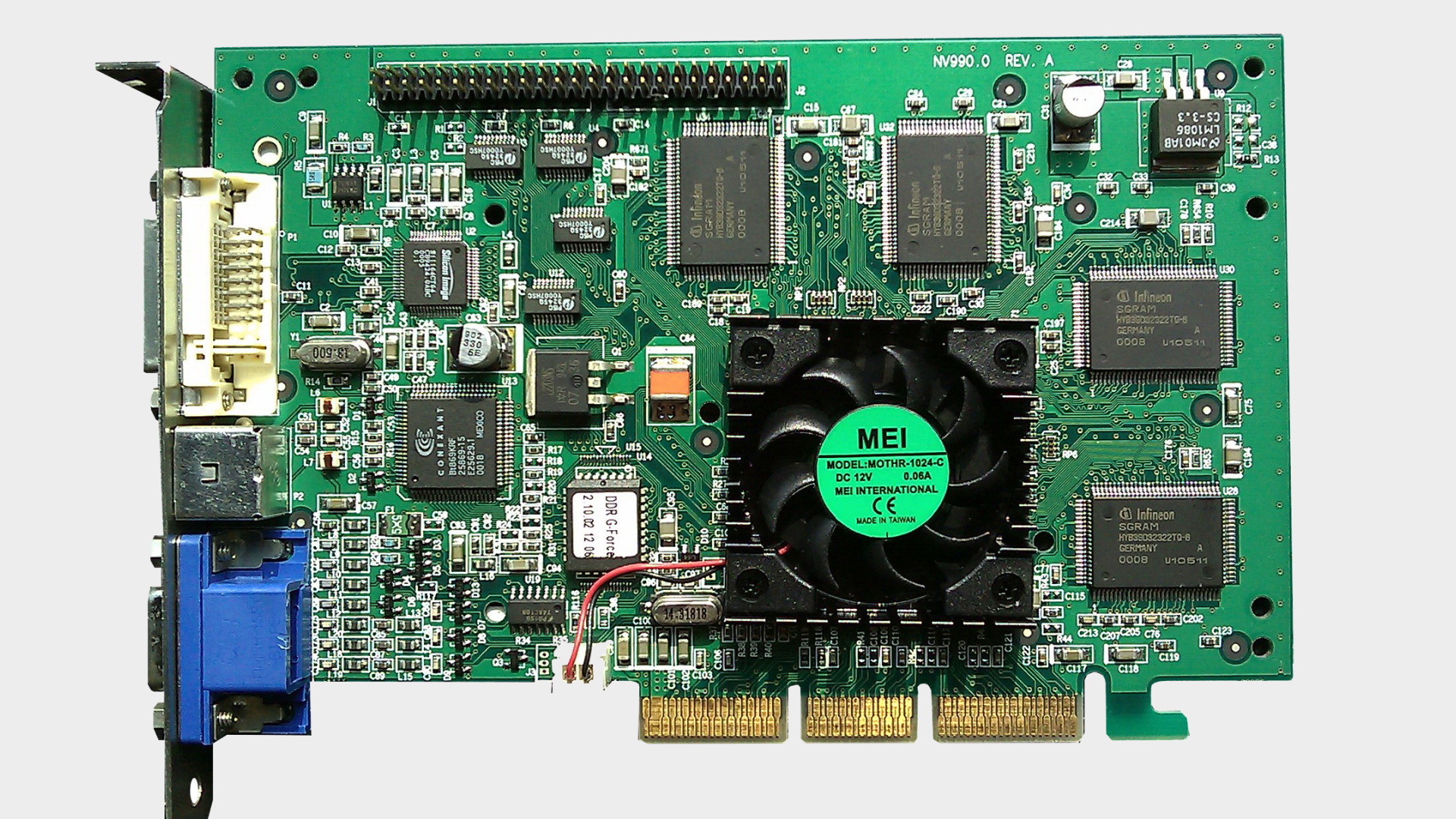
The first GPU
How, on the button, do you define a GPU or graphics processing unit? As early as the 1970s, thus-called arcade games had dedicated circuitry for rendering graphics. In the 80s, consumer computers like the Commodore Amiga had dedicated artwork chips. By the 1990s several vendors offered add-in boards for fast art that resembled today's high-stop GPUs in concept, including cards from S3, ATI (now AMD), PowerVR, and 3dfx.
Arguably, it was Sony that first coined the term GPU in 1994 in reference to the Toshiba-designed graphics kick in the PlayStation One.
But we'll give the accolade of the first GPU to the Nvidia GeForce 256 latterly 1999. IT was the first add-in board for a PC to be marketed as a GPU or Graphics Processing Whole.
Just as profound, it was the premiere consumer Personal computer card to offer a lone-chip graphics answer capable of transform, lighting, triangle setup and clipping and rasterising.
It was the hardware transform and inflammation financial support that actually set the GeForce 256 apart, offloading those tasks from the CPU and massively increasing rendering carrying out compared to the competition.
Just for the show and purely for fun, the GeForce 256 or NV10 As the chip was codenamed, was built on TSMC's 220nm process and contained 17 cardinal transistors. Nvidia's latest GPU, the GA102 monster in the GeForce RTX 3090, is produced on an 8nm process and packs 28 billion transistors. Progress doesn't half enjoy messing with Book of Numbers.
The first flat panel monitor
With the term flat panel monitor, we're deliberately identifying it from any kinda cathode ray or CRT display, much of which were latterly open with flat surfaces. Truthful apartment panels are far lighter and diluent than any CRT and cause come to rule reveal tech despite some obvious shortcomings.
Those issues largely relate to LCD or liquid crystal technology, which in turn has come to dominate the flat-control board market.
So, what and when was the first LCD flat panel monitor?
The first simple LCD panels in pocket calculators and digital watches were seen in the 1970s. It was 1972 when the now-dominant hands-on-matrix thin-picture transistor or TFT panel was first prototyped past Westinghouse in Pennsylvania, while 1982 proverb the first LCD TV from Seiko Epson in Japan, which was actually a take in, albeit monochrome, with Seiko besides first full-colour LCD TV in 1984, this time in a pocket device.
In 1988, Sharp demoed a 14-inch full semblance TFT LCD.
In the previous 80s and early 90s, laptop and desktop displays with monochrome panels appeared, pe-dating the first desktop full-colour monitors.
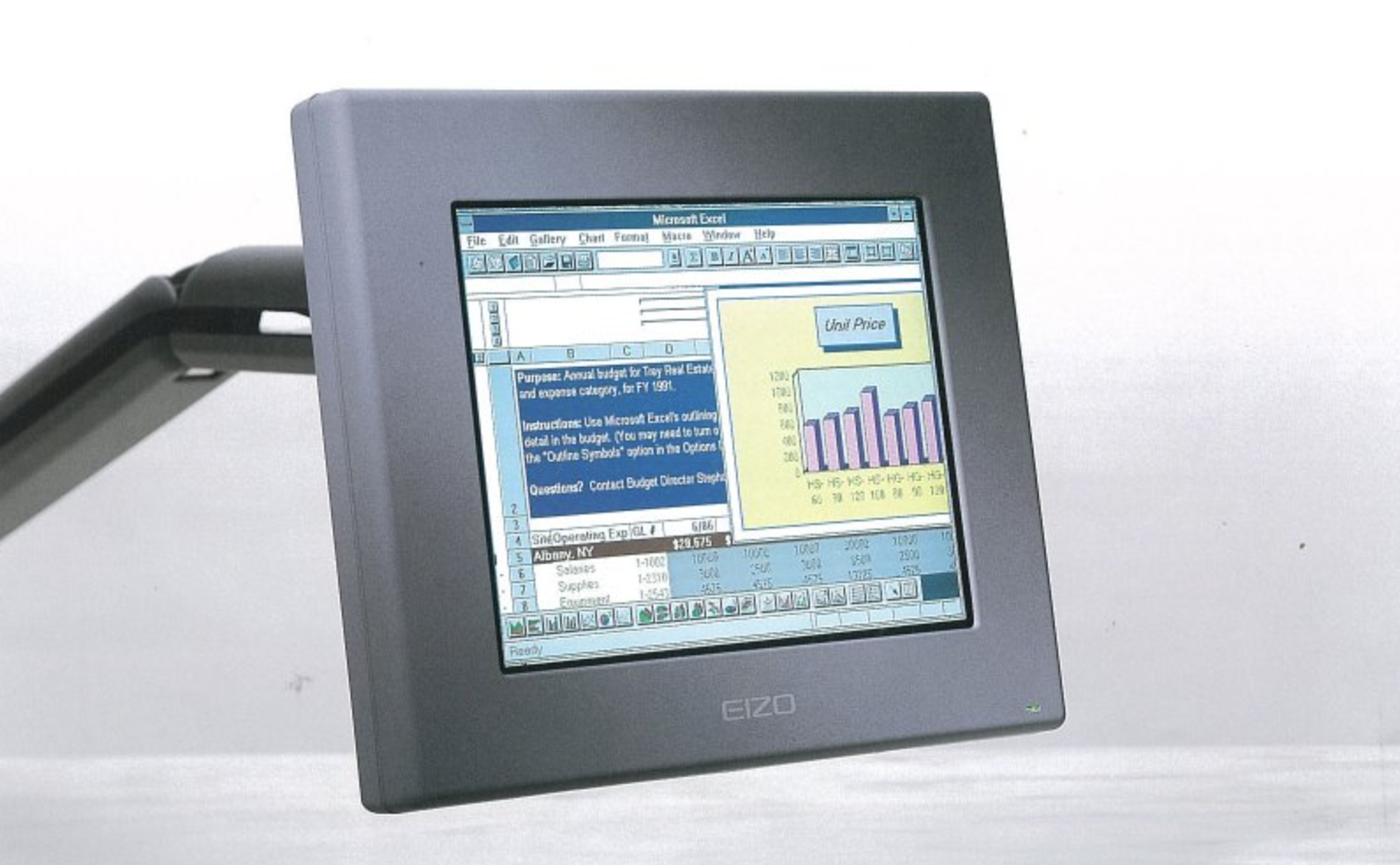
Indeed, pinning down the very first commercially available full-colour LCD monitor is a tricky task. But certainly one of the very earliest was the NANAO F-1020 from Eizo in 1993, a 10.4-inch TFT panel with a resolution of just 640 by 480 pixels. By Eizo's own estimation, the F-1020 was a flop.
Simply it was in 1998 that Eizo launched the L66, an 18-edge flat panel. It was the maiden to offer 1,280 by 1,024 pixels and arguably the first to really give CRT tech a run for its money.
Tongued of giving CRTs a run for their money nonpareil of the LCD monitors greatest weaknesses then and now has been response rate. Today's quickest Liquid crystal display panels are rated at around 1ms for pixel response. Back in 1997 when flat panels were first seemly widely available, many manufacturers didn't steady quote response multiplication. One exception was Panasonic which was particularly proud of the fast response of its 14-inch LC40, a 1,024 past 768 resolution manakin. Oh, and it was claimed to be good for an impressive 50ms response times.
The first-class honours degree PC
Of course, the single most important first in this context is the PC itself. Over again, narrow down the definition of what really makes for a PC or personal computer isn't a piffling project. You could indicate that kit computers like the MITS Altair of 1975 and indeed the Apple I from 1976 were among the same opening private computers. Indeed, the Altair even misused an Intel C.P.U..
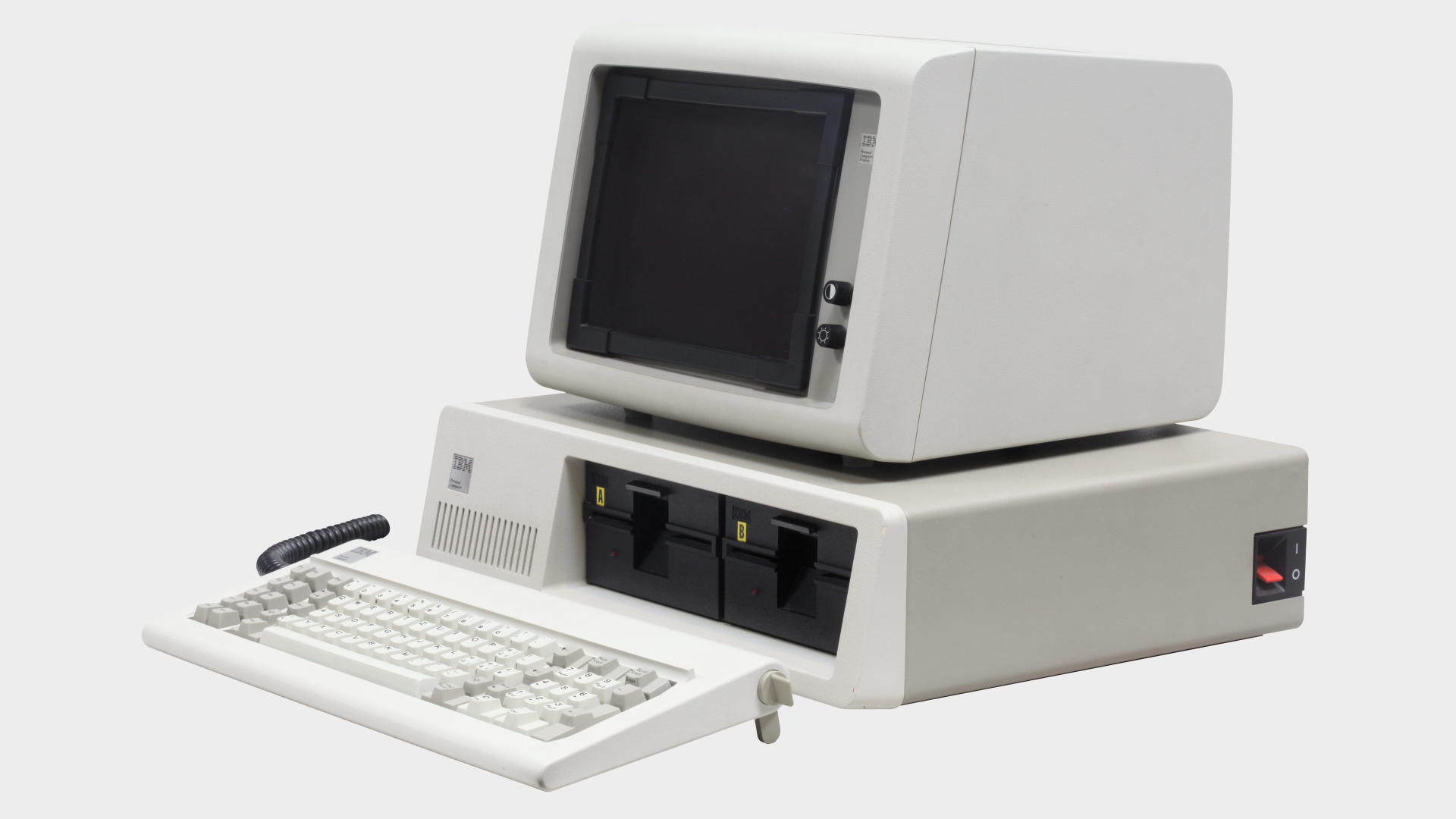
But we reckon IT was 40 years past and the 1981 origination of the IBM 5150, usually known simply A the IBM PC, that provided the critical template for the PC standard as its known today.
Critically, the IBM 5150 used the Intel 8088 processor, a variant of the sacred Intel 8086, the chip that has given its name to the x86 architecture itself and has provided the platform upon which the PC has simultaneously marched ever forward while maintaining backwards compatibility.
The IBM 5150's 8088 chip, incidentally, ran at a spectacular 4.7MHz, while the system's memory started at 16K and could be increased to a maximum of 256K with optional memory cards.
Its optional 13-inch colour monitor offered quatern colours and a gloss resolution of 320 aside 200 pixels. At launching there was none stonelike drive pick and computer storage was limited to the capacity of the 5.25-in floppy drive, offering a add together of 320K of storage crossways the two sides of the disk.
Even adding a mouse compulsory adding an expansion card. All of which is worth memory the next time you're notion glum about your PC's unfitness to crank quite enough frames at 1440p to make the most of your proctor's 240Hz refresh rate.

Source: https://www.pcgamer.com/celebrating-50-years-of-the-hardware-that-makes-our-pcs-tick/
Posted by: hamiltonsexpround.blogspot.com
0 Response to "Celebrating 50 years of the hardware that makes our PCs tick | PC Gamer - hamiltonsexpround"
Post a Comment